Abstract
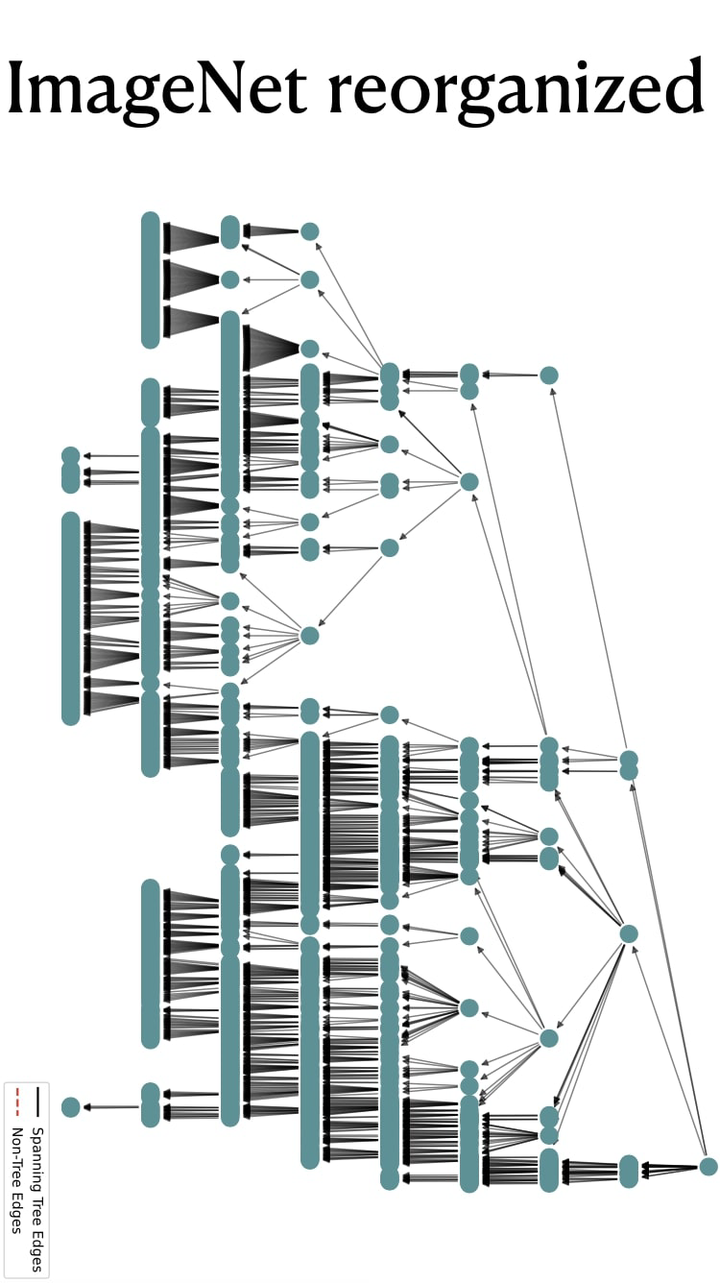
Hyperbolic geometry has shown to be highly effective for embedding hierarchical data structures. As such, machine learning in hyperbolic space is rapidly gaining traction across a wide range of disciplines, from recommender systems and graph networks to biological systems and computer vision. The performance of hyperbolic learning commonly depends on the hierarchical information used as input or supervision. Given that knowledge graphs and ontologies are common sources of such hierarchies, this paper aims to guide ontology designers in designing hierarchies for use in these learning algorithms. Using widely employed measures of embedding quality with extensive experiments, we find that hierarchies are best suited for hyperbolic embeddings when they are wide, and single inheritance, independent of the hierarchy size and imbalance.